
Most Ayurveda resorts sell an experience. Few can point to the room where the medicine is actually made. At Ayugiri, near Sigiriya, a Medicine Manufacturing Unit and an in-house pharmacy sit alongside the Ayurveda Treatment Centre, and every preparation a guest receives passes through both before it reaches them. That is a different proposition to a spa menu of herbal treatments bought in from an outside supplier. It is authentic Ayurvedic medicine in Sri Lanka, produced on the property, under the direction of the doctor who examined the guest in the first place, and matched to the treatment plan set out in that first consultation.
This piece looks at what that actually means: how the unit and pharmacy fit into a stay, and why the two together are one of the clearest signals that a programme here is closer to a clinical retreat than a wellness holiday with an Ayurveda theme.
Why the Distinction Between Spa Wellness and Clinical Ayurveda Matters
A lot of wellness resorts describe their offering as Ayurveda-inspired. Oils, massages and herbal wraps drawn from Ayurvedic tradition, sold as individual treatments a guest can pick from a spa menu, much like any other resort spa. There is nothing wrong with that model, but it is a different product to what Ayugiri offers, and the difference is worth being clear about before booking either one.
At Ayugiri, every stay begins with a consultation with the resident Ayurveda doctor. Treatments, meals, yoga, meditation and the daily routine are then planned around that individual, rather than chosen from a fixed list. The medicine is the part of that structure guests see least of, and it is also the part that makes the rest of it possible. Without a doctor able to prescribe something specific and a way to actually produce and dispense it, a “personalised plan” is really just a themed schedule.

What Authentic Ayurvedic Medicine in Sri Lanka Actually Requires
A doctor-led consultation only means something if what follows is genuinely built around it. That is where the Medicine Manufacturing Unit comes in. Herbal formulations are prepared on site, following traditional Ayurvedic methods, rather than sourced ready-made from a third-party supplier and applied to whichever guest happens to book that week.
The in-house pharmacy is what connects that preparation to the guest in front of it. Formulations produced in the unit are dispensed directly from the pharmacy as part of the treatment plan, so the same preparation a doctor specifies during a consultation can be produced and given to that guest during their stay, not ordered in from elsewhere and hoped to be close enough.
It is a set-up most resort-style wellness properties do not have: manufacturing and dispensing kept under one roof, next to the room where the prescription was written. For a guest, the practical difference is that the medicine used in a treatment is not a retail product with a fixed formula. It is prepared for the person receiving it, and it can change if the doctor’s assessment changes partway through the stay.
How the Pharmacy Connects to Ayugiri’s Treatment Packages
This structure matters most on the longer, more specific programmes, where the treatment plan changes as the stay goes on.
Guests on programmes built around cleansing, such as an ayurveda detox in Sri Lanka rather than general relaxation, draw on the pharmacy most directly. Preparations used during a Panchakarma-based programme are often mixed for that guest’s specific course and dispensed as the treatment progresses, rather than handed over in one batch at the start.
The same structure applies to longer, more targeted packages. The Swastha Asthi Suwa package, designed to support joint and bone health over 21 days, or the Swastha Charma Shamya package, aimed at skin health and rejuvenation over seven, both draw on preparations produced in the same unit. As the doctor reviews progress through the stay, what is dispensed can be adjusted rather than fixed from day one.
None of this replaces medical care a guest may already be under for a diagnosed condition. It is a traditional Ayurvedic programme, planned and adjusted by a resident doctor over the course of a stay, not a substitute for the guest’s own physician.
Where the Medicine Fits Into the Rest of the Stay
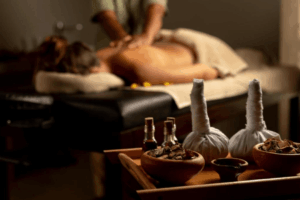
The pharmacy does not sit on its own. It is one piece of a wider structure that includes the Yoga Pavilion, meditation spaces, herbal bath facilities and organic dining planned around each guest’s individual needs. A doctor who prescribes a formulation from the pharmacy is usually also the one shaping what a guest eats that week and which sessions they attend at the Yoga Pavilion, so the medicine lines up with the rest of the plan instead of running alongside it as an extra.
That coordination is easy to describe and harder to actually deliver, since it depends on the doctor, the kitchen, the yoga instructors and the pharmacy all working from the same treatment plan rather than separate schedules. The manufacturing unit and pharmacy are the clearest physical proof that this coordination is real, since a formulation cannot be adjusted mid-stay unless it is genuinely being produced on site.
What This Means for a Guest Booking a Programme, Not Just a Treatment
The pharmacy is a small part of the property by size, and guests may never walk past it. But it may be the clearest single proof of what Ayugiri actually is: a place where the doctor, the medicine, the meals, the yoga and the daily schedule are one coordinated plan, and where the middle part of that plan, the medicine itself, is made specifically for the person taking it rather than picked from a shelf.
That is what authentic Ayurvedic medicine looks like in practice: less visible than a spa treatment, and more central to why the rest of the stay is built the way it is. A guest choosing between a resort with an Ayurveda-themed spa and a doctor-led programme with its own pharmacy is, in effect, choosing between two different products wearing the same label.
Staying at Ayugiri
Ayugiri sits within 54 acres of greenery close to Sigiriya, near enough that a guest on a longer programme can add a gentle cultural excursion between treatments without stepping outside the structure the stay was built around. For anyone who wants their time here to mean more than a series of spa bookings, that starts with the same consultation this piece has described: a doctor, a plan, and medicine prepared specifically for them.

Explore the hotel’s accommodation and current offers, or contact Ayugiri for help planning your stay. A programme built around medicine made specifically for you, rather than treatments chosen from a menu, starts with that first consultation.


