
A tea factory in 1903 would have run on paper for almost everything: production ledgers, tally sheets for pluckers, handwritten registers logging every batch that left the estate. That was simply how an operation this size kept track of itself. A century later, the same building runs on almost none of it. Newburgh Ella operates as a paperless hotel in Sri Lanka, and inside our converted tea factory, check-in, dining, and the back office all work without the printed forms a resort this size would normally generate. Here’s what that actually looks like day to day, from how guests check in to how the kitchen handles a bill.
A Working Factory, Rebuilt Around Digital Systems
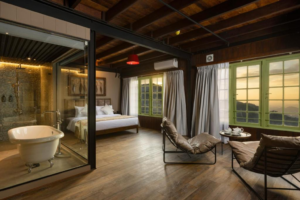
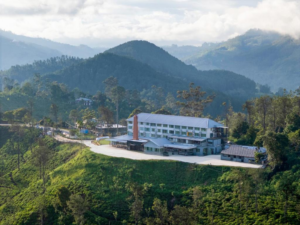
Newburgh Ella occupies the same estate George Thomson established in 1903, and the resort has kept much of what made it a factory rather than smoothing it into a conventional hotel. The building’s most visible feature, the orange chimney that gives the resort its skyline, was kept in place along with the original stonework and steel structures throughout, reused rather than demolished and rebuilt in a more conventional style. That decision, keeping the fabric of the building instead of rebuilding it, sits alongside a second, quieter one: running the hotel itself without the paperwork that usually comes with a 41-room property.
That combination, a heritage conversion paired with fully digital administration, isn’t the usual pairing. Heritage properties often lean on their history and leave day-to-day operations conventional. New-build eco-hotels often lean on their systems and skip the heritage angle. Newburgh Ella sits at the overlap of the two.
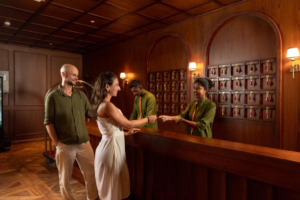
From the day it opened in January 2026, Newburgh Ella built its front-of-house operations around digital tools rather than the printed forms typical of a hotel this size. Guests check in digitally rather than filling out a paper registration card, and dining across the resort’s outlets, including 1903 – The Dining Room and Eastern Valley, runs on digital menus rather than printed ones.
The Systems Behind the Claim
Away from the guest-facing side, the larger reduction in paper happens in departments guests never see. Newburgh Ella’s back-of-house operations run on digital documentation rather than paper records, electronic communication in place of internal memos and circulars, cloud-based record management instead of filing cabinets, and electronic billing rather than printed invoices. Printing across the property is controlled rather than eliminated outright, since some paper use in a hotel is unavoidable, but it’s monitored and kept to a minimum.
In practice, that means guest registration details, staff records, and daily operational logs are kept as digital files rather than paper folders. Shift handovers and department notices go out through internal messaging rather than printed circulars pinned to a board. Guest folios and invoices are generated and sent electronically rather than run off a printer at checkout. Together, it adds up to a hotel that doesn’t generate the stack of forms, dockets, and registers a property this size usually would.
The resort has also tracked its own stationery and paper purchasing across departments, including front office, finance, food and beverage, and general administration, over a full year, then compared that record against what a similarly sized hotel would typically use running on paper. That’s where the number below comes from.
Measuring a Paperless Hotel in Sri Lanka
The figure Newburgh Ella arrived at is an estimated 1.3 tonnes of CO2 equivalent avoided annually, based on an internal comparison against the paper and stationery consumption a similarly sized hotel would typically generate over the same period. The reporting period runs from April 2025 to March 2026, covering the resort’s final stretch of preparation as well as its first months open to guests. It’s a modest number next to something like a solar installation or a fleet of electric vehicles. It comes from a full year of tracked stationery and paper purchasing records across the hotel’s departments.
The tracking covered the departments that generate the most paper: front office, finance, food and beverage, and general administration. Staff records were tracked separately, since HR documentation follows its own process across the group.
Newburgh Ella has submitted the figure to Sri Lanka’s National Cleaner Production Centre (NCPC), a body established in 2002 under the Ministry of Industry, for independent verification, a process that’s still underway. It shows where paper actually goes in hotel operations: stationery, printed forms, invoices, guest communication, and how much of it Newburgh Ella has avoided by building its systems digitally from the outset rather than retrofitting them later.
Who’s Running It
The people managing these systems are, in a number of cases, the same people who once worked in the building when it was a functioning tea factory. Newburgh Ella has employed former factory staff in hospitality roles as part of the resort’s wider sustainability efforts, a detail that sits oddly well against the paperless story: a building that once ran on ledgers and handwritten records, staffed partly by people who remember that era, now keeping the records of a paperless hotel in Sri Lanka on a screen instead.
Running paperless systems well depends on staff using them consistently, department after department, rather than slipping back into old habits when things get busy. Newburgh Ella’s team spans people new to hospitality and people who spent years inside this same building before it became a hotel, and both groups now work from the same digital systems rather than parallel paper ones. Browns Hotels & Resorts has said the arrangement was designed so that heritage, sustainability, and hospitality could develop together rather than as separate initiatives.
Staying in a Working Piece of History
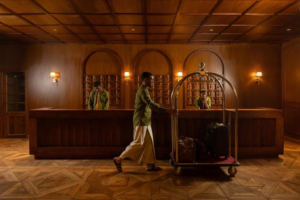
A stay at Newburgh Ella means waking up inside a working piece of Ella’s tea history, with the practical, everyday side of the resort, check-in, dining, the back office, running quietly on screens rather than paper. Guests won’t necessarily notice most of this directly, no one goes looking for a printed form that isn’t there, but it shapes small parts of the visit: a quick digital check-in on arrival, a tablet menu at dinner, a folio that arrives by email rather than slid under the door. It’s a small detail against the scale of the chimney and the hills beyond it, but it’s part of the same story: a building given a second life, run the way its next hundred years call for.
Explore our hotel rooms in Ella and current offers, or contact Newburgh Ella for help planning your stay. It’s the kind of detail you might only notice once you’ve stayed long enough to look for it.


