
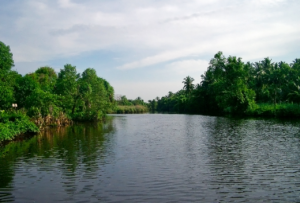
A short distance from Negombo, the waterways of Waikkal offer a quieter look at Sri Lanka’s west coast. Gin Oya moves through riverside communities before reaching the sea, with mangrove plants growing along sheltered parts of its banks.
The Gin Oya mangroves are worth visiting for travellers who want to understand the connection between the river, the coast and local life. A slow boat ride may reveal arching roots, broad palm fronds, fishing activity and birds moving between the water and trees.
This guide explains what makes the habitat special, what visitors may see, when to go, and how to enjoy the river without disturbing it.
Where Is Gin Oya?
Gin Oya is a coastal river that passes through the Waikkal region, north of Negombo. Near its lower reaches, fresh river water mixes with salt water influenced by the sea. This creates brackish conditions suited to several mangrove plants.
Mangroves may appear in narrow belts or small patches where the bank, water flow, mud and salinity allow them to grow. Local homes, fishing activity and small boats are also part of the setting, so a visit offers both nature and a view of daily river life.
Image suggestion: A small boat moving along a mangrove-lined section of Gin Oya
Alt text: Small boat travelling through a mangrove-lined waterway in Waikkal
What Makes These Mangroves Special?
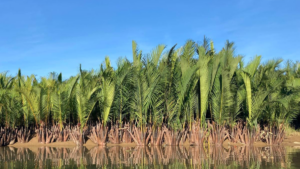
Mangroves grow where many ordinary land plants would struggle. Their roots and tissues can cope with wet, oxygen-poor soil and changing levels of salt in the water.
Along Gin Oya, one of the most distinctive plants is the Nipa palm, known locally as Gin Pol. Unlike a familiar coconut palm, much of its trunk grows beneath the mud. Long fronds rise directly from the riverbank, sometimes forming dense groups close to the water.
The palm is linked mainly with tidal rivers and estuaries where the water is brackish rather than fully marine. Its rounded fruit heads break into separate sections that can float with the water.
Visitors should avoid touching leaves, fruit or young plants. A plant that appears strong above the water may still have a sensitive root system below the mud.
Why Mangroves Matter to the River
Mangrove roots slow the movement of water close to the bank. This helps hold soil and sediment in place, which can reduce erosion.
Their roots also create sheltered spaces for young fish, crabs and other small aquatic animals. Fallen leaves become part of the river’s food system as they break down. Birds and insects may use the plants for feeding, nesting or shelter.
The Gin Oya mangroves form a natural link between inland water and the coast. When these plants are damaged, the riverbank becomes more exposed and animals that depend on sheltered water may lose part of their habitat.
Conservation work therefore needs to consider the whole river system. The right species must be placed where water flow, salinity and soil conditions suit its growth, followed by care and monitoring.
What Might You See During a Visit?
Every trip is different. Rain, water levels, time of day and boat movement can affect what is visible.
You may notice:
- Nipa palms and other riverside plants
- Mangrove roots rising from soft mud
- Small fish and crabs near shallow banks
- Waterbirds resting or feeding
- Fishing boats and daily river activity
- The gradual change from river vegetation towards the coast
Wildlife sightings are never guaranteed. A quieter trip often gives you a better chance of noticing small movements and sounds. Keep conversations low and avoid playing music.
A local guide can explain plant names, water conditions and community practices. Avoid asking a boat operator to move too close to birds or other animals for a photograph.
When Is a Good Time to Visit?
Sri Lanka’s west coast usually has drier beach weather from November to April. These months may provide more comfortable conditions for a river outing, though short showers can occur.
The southwest monsoon generally affects the western side of the island from May to September. Trips may still operate, but rain, stronger wind and changing water flow can affect the route.
Early morning is often a good choice because temperatures are lower. Late afternoon can also be pleasant, though you should allow enough daylight for the return journey.
Check the forecast before leaving. Never continue with a boat trip during thunder, heavy rain, poor visibility or strong wind.
How to Prepare for a River Trip
Wear light clothing that covers your shoulders and legs, especially if the boat has little shade. Quick-drying clothes are useful, while closed sandals or shoes with grip can make boarding easier.
Bring:
- Drinking water in a reusable bottle
- A hat and sun protection
- Insect repellent
- A small rain cover
- A waterproof phone pouch
- Binoculars for birdwatching
- Cash for local payments
Confirm the duration, route, price and meeting point before departure. Ask whether children can join, whether life jackets come in suitable sizes and whether the operator changes plans during poor weather.
How to Visit Responsibly
Choose an operator that provides life jackets, follows safe boat speeds and keeps a respectful distance from wildlife and riverbanks.
During the trip:
- Do not throw food, plastic or cigarette ends into the water
- Do not feed birds, fish or other animals
- Avoid breaking leaves or collecting fruit
- Keep noise low near resting birds
- Stay in the boat or on recognised paths
- Ask permission before photographing residents
- Take all waste back with you
Mangrove mud may look firm but can be deep and unstable. Children should stay beside a responsible adult throughout the visit.
How Club Hotel Dolphin Supports Gin Oya Conservation
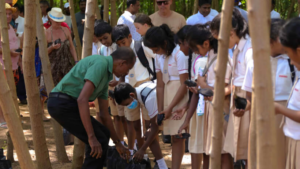
Club Hotel Dolphin is a beachfront resort in Waikkal, close to the river and coast. The hotel began a five-year Nipa Palm Conservation Project in July 2024 under guidance from Wayamba University and the Wildlife and Nature Protection Society.
A nursery was started with 500 Nipa palm seeds. Young palms were later transplanted along the Gin Oya riverbanks in February 2025 to support riverbank restoration and help address erosion.
The hotel also reports Kumbuk tree planting along riverbanks, beach clean-ups with the local community and the treatment of wastewater for garden use. Guests can read more about these sustainability initiatives before their stay.
This work shows why long-term care matters. Young plants need suitable sites, expert guidance and follow-up if they are to become part of a healthy riverbank.
Plan Your Stay Near the Gin Oya Mangroves
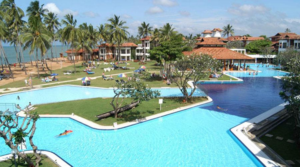
For travellers seeking a Negombo hotel with access to both the beach and Waikkal’s river setting, Club Hotel Dolphin offers a useful base. Its location allows guests to combine time by the sea with a locally arranged visit to Gin Oya.
The hotel offers rooms and villas within its beachfront property. Before planning a river trip, ask the team about current local travel advice and suitable operators, as routes and availability may change with the season.
Review the hotel’s current offers or contact Club Hotel Dolphin when arranging your stay. A visit to Gin Oya can add a thoughtful nature experience to a west coast holiday when planned with care for the river and the communities beside it.


