A traditional Sri Lankan village kitchen has no gas hob and no electric oven. It has a clay stove called a dara lipa, built from earth and stones, fed by firewood, and a set of blackened clay pots that have been used so many times they’ve started improving the food cooked in them. Sri Lankan village cooking runs on tools and methods that predate the modern kitchen entirely, and it’s still very much alive in homes across the island, not just recreated for visitors. A handful of these dishes and techniques have made their way onto hotel menus too, Mango Village at Club Hotel Dolphin among them, which makes it worth knowing where the tradition actually comes from.
The Kitchen Built From Clay and Fire
The dara lipa sits at the centre of this style of cooking. Built from clay and stone, it burns firewood underneath a curry pot or a rice pot, giving a cook precise control over heat in a way that looks simple but takes years to master. The wood itself does real work too, imparting a smoky depth to food that a gas flame can’t replicate.
Clay pots do their own quiet job alongside the stove. The material is porous, which means it breathes during cooking, regulating both heat and moisture as a curry simmers. Sri Lankan cooks will tell you a clay pot gets better with age and use, absorbing flavour over years of cooking and releasing a little of it back into every new dish. None of this is treated as old-fashioned or inferior to modern cookware. In many village households, it’s simply the way food has always been made, and the way people prefer it to taste.
A few other tools round out a traditional kitchen. A wooden mortar and pestle grinds spices and, in some households, pounds freshly harvested rice into flour for other dishes. A nambiliya, a grooved clay bowl, is used to wash rice and separate the grains from stones and chaff, the water swirled until debris catches in the grooves while lighter husks float to the surface. None of these tools are relics kept for display. They’re still in daily use across large parts of rural Sri Lanka.
Ingredients From the Garden, Not the Shop
Village cooking in Sri Lanka has traditionally leaned on whatever grows nearby rather than what’s available at a shop. Backyard gardens supply vegetables, greens, and fruit as needed, picked the same day they’re cooked rather than stored for a week. Spices get roasted and ground fresh using a mortar and pestle, then tempered in hot oil before the rest of a curry comes together, a step that unlocks far more flavour than adding raw spice powder straight into a pot. Even coconut, one of the most common ingredients in Sri Lankan cooking, is typically grated fresh from the shell rather than bought pre-packaged, another small habit that shapes how the finished dish actually tastes.
That habit of using what’s close at hand rather than what’s convenient is part of what gives village cooking its character. Two households a few kilometres apart, drawing on slightly different gardens, will often produce noticeably different versions of the same basic curry. It’s one of the reasons Sri Lankan village cooking resists being reduced to a single fixed recipe, the technique stays constant even as the exact ingredients shift from one kitchen to the next.
Two Dishes That Show Sri Lankan Village Cooking at Its Best
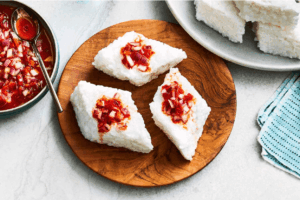
Kiribath, milk rice cooked in coconut milk until soft and slightly sticky, is as much ceremony as it is breakfast. Sri Lankan families prepare it for new jobs, exams, birthdays, and especially for Avurudu, the Sinhala and Tamil New Year, when it takes pride of place on the table. Traditionally, it’s cooked in a clay pot over an open fire, the same combination running through most of this cooking style, and it’s typically cut into diamond shapes and served with lunu miris, a fiery onion and chilli relish, to balance the rice’s mildness.
Lamprais tells a different story. A labour-intensive dish traditionally eaten on Sunday after church, it combines rice, meat, and accompaniments wrapped and steamed inside a banana leaf, a process that historically took the better part of two days from start to finish, cleaning the leaves, cooking each component separately, and folding everything together before steaming. It’s since moved from a weekly ritual to something available in restaurants any day of the week, but the preparation itself hasn’t been shortened, a proper lamprais still asks for the same patience it always did.
Why the Banana Leaf Still Matters
Banana leaf, or kesel kole, shows up throughout Sri Lankan cooking in two distinct roles: as a cooking vessel, wrapped around food like lamprais before steaming, and as a plate, used to serve meals directly rather than on ceramic or metal. Both uses share a practical logic. The leaf is biodegradable, needs no washing up afterwards, and imparts a faint, specific aroma to whatever sits on or inside it that no other material quite replicates.
There’s a cultural weight to it too. Eating off a banana leaf is common at traditional feasts and ceremonial meals, not just an aesthetic choice for photographs. It signals a meal cooked and served the traditional way, start to finish, and it’s part of why lamprais, kiribath, and other ceremonial dishes still turn up on banana leaves even in households that use ordinary plates for everyday meals. The leaf marks the occasion as different from a normal weekday dinner.
Bringing This Tradition to the Table at Club Hotel Dolphin
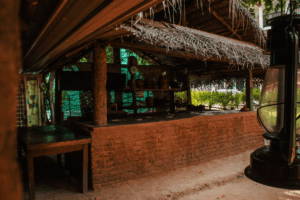
Mango Village at Club Hotel Dolphin draws directly on this style of cooking: dishes prepared over open fire, using ingredients sourced from the surrounding village, and served on kesel kole rather than a standard plate. It’s a rare chance for guests to encounter this tradition without needing to track down a village homestay themselves, particularly for anyone staying at a large resort who might otherwise only see hotel-standard buffet dining during their trip.
For anyone looking at things to do in Negombo beyond the beach and the pool, an evening built around this kind of cooking is a genuinely different addition to a stay, closer to the island’s everyday food culture than a standard hotel buffet ever gets, and a decent starting point for anyone curious about Sri Lankan cuisine beyond the dishes already familiar from home.
Plan Your Stay
A stay at Club Hotel Dolphin puts this tradition within easy reach, alongside everything else the resort has on offer. Mango Village gives guests a taste of a cooking style that’s shaped Sri Lankan food for generations, long before hotels were ever part of the picture.
Explore the hotel’s accommodation and current offers, or contact Club Hotel Dolphin for help planning your stay. A meal cooked this way is worth booking early in your trip, if only so you have an excuse to ask the kitchen more questions afterwards.