
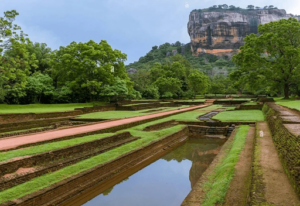
Most visitors arrive at Sigiriya thinking first about the climb. Yet before the stairways, frescoes and Lion Gate, the route passes through a carefully planned garden system at ground level.
The Sigiriya water gardens were built during the reign of King Kassapa I in the late fifth century. Their pools, channels, islands and fountains formed part of a royal city designed around both the rock and the movement of water. Parts of the underground system still function after more than fifteen centuries.
Understanding how the system worked can change the way you see the whole fortress. The gardens show that Sigiriya was planned as a connected city rather than a palace placed on top of a rock.
A Royal City Built Around Water
King Kassapa made Sigiriya his capital between 477 and 495 CE. The city included defensive moats, ramparts, royal buildings, gardens, religious spaces and a palace on the summit.
Water filled moats, supplied pools and fountains, and helped shape the route towards the rock. Still water created reflections, while moving water brought sound into the royal grounds.
The western precinct followed a main east-to-west path. Visitors entering from this side would have passed through water, gardens and buildings before reaching the boulder and terraced sections closer to the rock.
How the Sigiriya Water Gardens Were Arranged
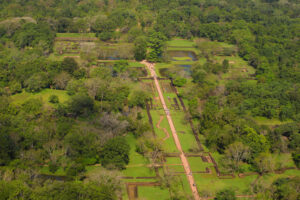
The gardens were a series of linked spaces with different shapes and levels.
The first section included an island-like plot surrounded by water and reached by causeways. Farther along the central path, long pools were placed on either side. Raised islands within the water once held structures commonly understood to have been summer pavilions.
Another section included shallow winding channels and fountains. Beyond it, the ground rose towards a higher garden with an octagonal pool. From there, the formal plan gradually gave way to the large natural rocks and steps nearer the fortress.
The lower gardens used straight lines and repeated forms, while the later parts of the route worked more closely with the natural shape of the site.
Where Did the Water Come From?
Sigiriya lies in Sri Lanka’s dry zone, so a dependable supply required careful planning. The wider site used rainwater storage, nearby reservoirs, moats, pools, cisterns and underground conduits.
Water moved from higher to lower points through channels and sealed passages. The difference in height allowed gravity to keep it flowing without a mechanical pump.
The pools and moats were connected rather than treated as separate features. Water could therefore be stored, directed and released through different parts of the grounds. Drainage also helped move heavy rain away from key structures.
How Did the Fountains Work?
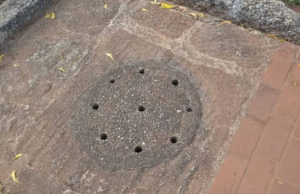
The fountains used gravity and water pressure.
Water entered enclosed conduits from a higher level. As it moved down through the system, pressure increased. When it reached small openings in the fountain stones, that pressure pushed the water upwards.
The fountains did not need electricity or a continuously working pump. They depended on enough stored water and a sufficient difference in height. This is why some can still operate during or after periods of heavy rain, while they may remain dry in hotter conditions.
Why Were the Gardens Designed This Way?
The water system served practical needs, but the layout also shaped how people experienced the royal city.
Long pools on both sides of the path drew the eye towards the rock. Raised pavilions created spaces separated from the main route by water. Reflections changed with the light, while fountains would have added gentle sound during wet periods.
The moats and ramparts also had a defensive purpose. Water sat within a wider plan that brought together security, movement, royal life and visual order.
Some details remain open to interpretation. Archaeologists can study foundations, channels and surviving structures, but they cannot know every activity that took place beside each pool.
What Can Visitors See Today?
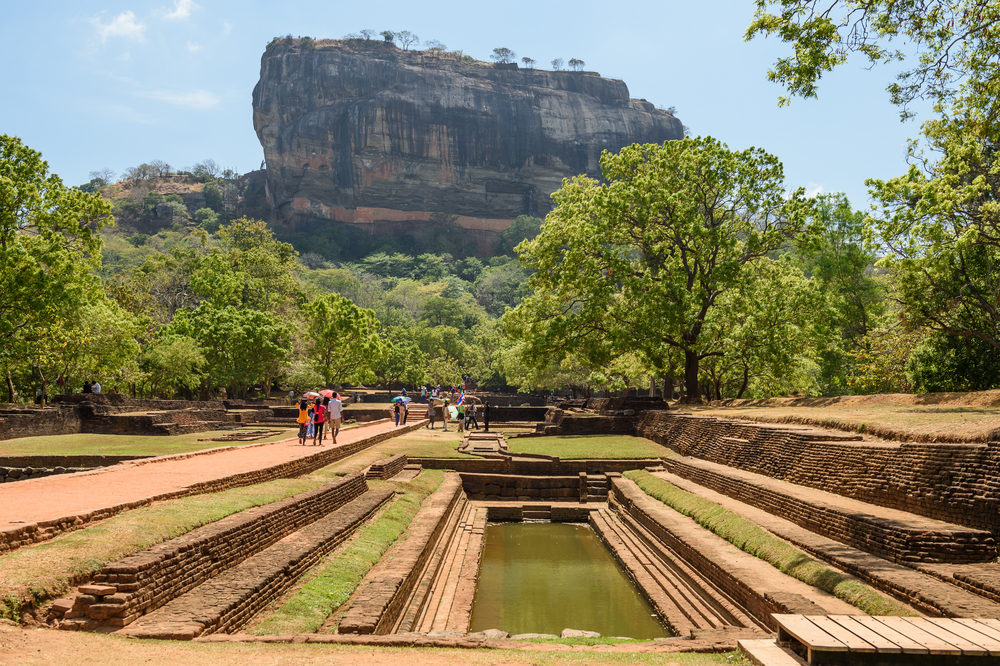
The garden section begins before the main ascent and is easy to pass through too quickly. Look for the relationship between the central path, pools, low brick walls and changes in ground level.
You may see:
- Large rectangular pools on either side of the approach
- Raised islands where buildings once stood
- Narrow water channels
- Stone fountain openings
- Moats and defensive earthworks
- The change from formal gardens to boulder and terraced sections
The fountains are seasonal. Recent rainfall may make the system easier to understand, but visitors should not expect a display on every visit.
A licensed guide can explain less obvious features. The Sigiriya Museum is also useful for understanding the city plan before or after entering the site.
When Should You Visit?
An early start is usually the most comfortable choice. The air is cooler, and you can spend time in the gardens before beginning the exposed parts of the climb.
Late afternoon may also bring softer light, but leave enough time before closing. Opening hours, tickets and visitor rules can change, so check the Central Cultural Fund’s current information before travelling.
Rain can make the ancient system more visible, though paths and stone edges may become slippery. Wear shoes with good grip and move carefully near pools, steps and wet brickwork.
Image suggestion: Visitors walking beside the pools early in the morning
Alt text: Visitors walking through Sigiriya’s ancient gardens in the morning
What Should You Bring?
Take drinking water, a hat, sun protection, comfortable shoes and light clothing. A small rain cover is useful during wetter months.
Avoid carrying a heavy bag. Keep food packed away, follow staff instructions and place all waste in the correct bins.
How to Visit with Care
Sigiriya is a protected archaeological site and a UNESCO World Heritage property. Stay on marked routes and do not climb on low walls or enter closed sections.
Avoid touching fountain stones, feeding animals or leaving food waste behind. Keep children close near pools and uneven ground. Giving yourself enough time also helps you appreciate the lower gardens instead of rushing towards the stairs.
Plan a Stay Near the Sigiriya Water Gardens
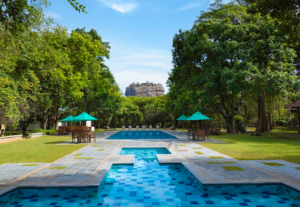
Staying close to the fortress makes an early visit easier and gives you time to see the gardens before the day becomes hot. Hotel Sigiriya is set near the archaeological site and is known for its direct view of Lion Rock, including from its outdoor pool.
After a morning at the fortress, guests can return for a meal, time by the pool or a spa treatment. The hotel’s guide to things to do in Sigiriya can also help with planning other cultural and nature visits.
Explore the hotel’s accommodation and current offers, or contact Hotel Sigiriya for help planning your stay. Seeing the gardens slowly, then returning to a nearby place to rest, gives you a fuller understanding of Sigiriya beyond the climb.


