
If seeing Maduru Oya elephants in the wild is the reason you’re building a safari into your stay, timing matters more than it does at some of Sri Lanka’s better-known parks. Maduru Oya isn’t run on a single big “gathering season” the way Minneriya is; instead, it rewards visitors who show up at the right hour, at the right time of year, and know roughly where to look. Here’s what to expect.
Why Maduru Oya Is One of the Quieter Places to See Elephants
Maduru Oya National Park was established in 1983 to protect the catchment area around its reservoir, one of five built under the Mahaweli Development Programme. It’s home to an estimated 150 to 200 elephants, a genuinely large resident population, but the park itself sees far fewer visitors than Yala, Udawalawe, or Minneriya.
That makes for a different kind of safari. Rather than several jeeps circling the same sighting, Maduru Oya tends to feel remote and unhurried, red soil plains, dry evergreen forest, and stretches of tall grass where elephants can appear and disappear with very little warning.
When to See Maduru Oya Elephants: Best Months and Time of Day
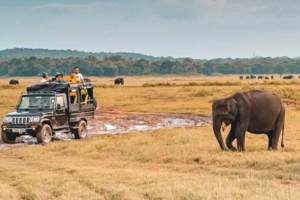
The dry season, roughly March to September, is consistently the best window. As the smaller waterholes dry up, elephants concentrate around the reservoir and the remaining water sources, which makes them considerably easier to spot than during the wetter months.
Within that season, time of day matters just as much as the month. Early morning and late afternoon safaris, timed around dawn or dusk, give the best chances of a sighting, since this is when elephants tend to move down to the water to drink and bathe. Several visitors describe watching elephants swimming or wading at the reservoir’s edge as the light drops in the evening, a slower, quieter version of the classic safari moment.
Where in the Park Elephants Tend to Gather
Elephants at Maduru Oya move along old forest corridors between feeding grounds and water, so sightings cluster around a few areas rather than being spread evenly across the park:
- The reservoir shoreline, where herds come to drink, bathe, and cool off, particularly at dusk.
- Open grassland patches, where the tall “Guinea grass” gives cover until elephants step into the open to feed.
- Waterholes further from the reservoir, which become the main draw once the smaller pools elsewhere in the park dry out.
A good guide will generally know which of these to head for depending on the season and time of day, so it’s worth asking your driver or operator about recent sightings before you set out.
What Else You Might See on Safari
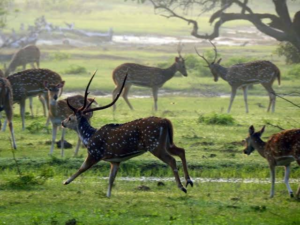
Elephants are the headline reason most people book a Maduru Oya safari, but the park supports a wide range of other wildlife too:
- Leopards and sloth bears, though both are seen far less often than elephants
- Sambar, spotted deer, and barking deer
- Wild buffalo and wild boar
- Toque macaques, purple-faced leaf monkeys, and the nocturnal slender loris
- Over 100 recorded bird species, including painted storks, sea eagles, and the lesser adjutant
Planning Your Maduru Oya Safari from The Calm
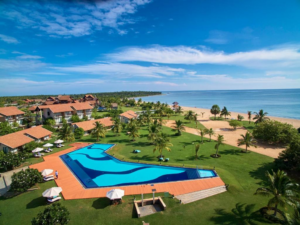
Maduru Oya is around 2 hours and 22 minutes from The Calm Resort & Spa, making it a full safari day out rather than a quick add-on, so it’s worth planning around an early start or a late-afternoon departure rather than trying to fit it in alongside other activities.
A few practical points to keep in mind:
- The park generally operates from 6:00am to 6:00pm, so morning safaris need an early departure from the resort to make the most of the dawn window.
- Safaris are done by open 4×4 jeep with a guide; entrance fees are typically separate from the vehicle and guide cost.
- Guides will ask you to stay inside the vehicle at all times once elephants are nearby, for your safety and theirs.
- Light, breathable clothing, a hat, and sun protection make the hours in an open jeep considerably more comfortable.
As one of the more established hotels in Pasikuda, The Calm Resort & Spa makes a comfortable base for the early start and the return drive, with the option to rest by the pool or head to the spa once you’re back.
Ready to Head Out?
For many guests, seeing elephants in Maduru Oya up close is the single most memorable part of a stay on this coast, and a little planning around timing makes a real difference to whether you catch them. Explore the hotel’s accommodation and current offers, or contact The Calm Resort & Spa for help planning your stay.


