
A stay in Sigiriya gives travellers easy access to some of Sri Lanka’s most meaningful cultural sites. While the Lion Rock Fortress often becomes the main reason to visit the region, the surrounding Cultural Triangle has many places that add depth to the journey.
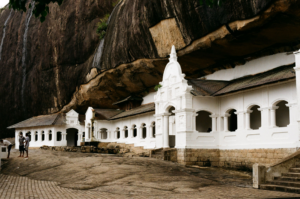
One of the most rewarding places to include is Dambulla Cave Temple, a sacred cave complex known for its Buddhist art, statues, and quiet hilltop setting. It is a good choice for travellers who want to understand more of Sri Lanka’s ancient religious and artistic heritage while staying close to Sigiriya.
Recognised by UNESCO as a World Heritage Site, the cave temple has been a pilgrimage site for over 22 centuries and is known for its five sanctuaries, mural paintings, and more than 150 statues.
Why Visit from Sigiriya?
Sigiriya and Dambulla are often visited together because they sit within the same cultural region. A trip to Dambulla works well as a half-day experience, especially for travellers who do not want to spend the whole day moving between distant sites.
The journey gives visitors a chance to see another side of Sri Lanka’s heritage. Sigiriya tells a story of royal ambition, ancient engineering, gardens, and fortress life. Dambulla offers a quieter spiritual experience through cave shrines, paintings, and Buddhist devotion.
For travellers staying in Sigiriya, this makes Dambulla a natural addition to the itinerary. It is close enough for a relaxed visit, but different enough to feel like a separate cultural experience.
What Makes Dambulla Cave Temple Special?
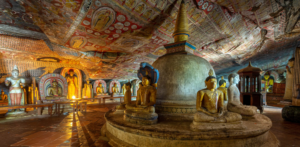
The cave temple is set beneath a large rock overhang, with shrine rooms built into natural caves. Inside, visitors can see rows of Buddha statues, painted ceilings, and wall murals that reflect centuries of religious art.
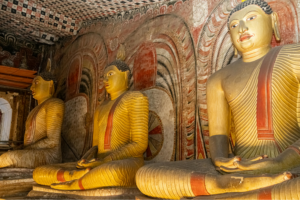
The space feels calm and sheltered. Light enters softly through the cave openings, while the painted interiors create a strong sense of history. This is not a place to rush through. The detail is in the faces of the statues, the colours on the ceiling, and the stillness of the shrine rooms.
UNESCO notes that the mural paintings cover around 2,100 square metres, while the temple complex contains 157 statues. This makes it one of the most important and well-preserved cave temple sites in Sri Lanka.
What to Expect During the Visit
Visitors should expect a short uphill walk before reaching the cave entrance. The climb is not extremely long, but it can feel warm during the middle of the day. Comfortable footwear, water, and light clothing will make the visit easier.
Before entering the shrine spaces, visitors need to remove their shoes. As this is an active religious site, modest clothing is important. Shoulders and knees should be covered.
Inside the caves, the atmosphere is quiet and respectful. Photography may be allowed in some spaces, but visitors should avoid posing in front of Buddha images in a disrespectful way. It is always better to observe local signs and follow guidance at the site.
Best Time to Visit
Morning or late afternoon is usually the most comfortable time to visit. These times are better for avoiding the stronger heat, especially because there is an uphill walk before entering the caves.
If you plan to visit Sigiriya Rock and Dambulla on the same day, start early. Many travellers prefer to climb Sigiriya in the morning, rest during the hottest hours, and visit the cave temple later in the afternoon.
Can You Visit Sigiriya and Dambulla in One Day?
Yes, it is possible to visit both in one day, but the pace matters. Sigiriya Rock requires more physical effort, so it is better to do that climb earlier when the weather is cooler.
A simple one-day plan could look like this:
- Early morning: Visit Sigiriya Rock Fortress
- Late morning: Return for breakfast or rest
- Afternoon: Visit Dambulla
- Evening: Enjoy a slower dinner and quiet time at the hotel
This plan gives travellers enough time to enjoy both places without rushing through the details. If you have more than one night in the region, spreading the visits across two days may feel more relaxed.
What to Wear and Bring
A little planning helps make the visit smoother. Since Dambulla is a religious site, clothing should be respectful and comfortable.
Useful things to bring include:
- Light clothing that covers shoulders and knees
- Socks for walking after removing shoes
- Drinking water
- Sunscreen and a hat
- A small bag for personal items
- Cash or card, depending on ticket arrangements
- A camera or phone for photos
Avoid loud behaviour, touching murals, or disturbing worshippers. These cave shrines are not only visitor attractions. They are part of Sri Lanka’s living Buddhist heritage.
Responsible Travel Tips
The art and shrine spaces at Dambulla are old, delicate, and culturally important. Visitors can help protect the site by moving carefully, avoiding flash photography where restricted, and not leaning against painted walls or shrine structures.
It is also important to respect the religious setting. Speak softly, step aside for worshippers, and follow the instructions given by site staff. Small actions like these help keep the visit meaningful for everyone.
Responsible travel also means planning with care. Visiting outside the hottest hours, carrying your own water bottle, and avoiding litter all help reduce pressure on busy heritage sites.
Plan Your Cultural Triangle Stay from Hotel Sigiriya
If you are planning to stay at a hotel in Sigiriya, a visit to Dambulla Cave Temple adds another layer to your holiday, giving you time to experience Sri Lanka’s Buddhist art, devotion, and history alongside the region’s famous rock climbs and safari routes.
Hotel Sigiriya offers a convenient base close to Sigiriya Rock and within easy reach of Dambulla, Pidurangala, Minneriya National Park, Kaudulla National Park, village walks, hot air ballooning, and guided bird trails.
Contact Hotel Sigiriya directly, explore the rooms, or view current offers to plan a calm and meaningful Cultural Triangle stay.


