
Dambulla is usually associated with ancient cave temples, royal history and routes towards Sigiriya. A short journey from the town, however, leads to a much earlier chapter of Sri Lanka’s past.
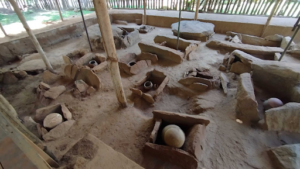
The Ibbankatuwa Megalithic Tombs form an ancient burial ground dating to the early first millennium BCE. The low stone chambers may look modest beside the island’s later temples and stupas, but they preserve evidence of communities that lived here before Sri Lanka’s well-documented historic kingdoms.
For a first-time visitor, the site becomes far more meaningful once you understand how the graves were made, what was placed inside them and what those objects tell us about the people who lived nearby.
Why Ibbankatuwa Matters
Ibbankatuwa belongs to Sri Lanka’s protohistoric period, often linked with the Early Iron Age. “Protohistoric” refers to a time for which archaeology provides much of the evidence, while written records are limited or absent.
Research places the cemetery broadly between about 700 and 450 BCE. This means the graves were in use centuries before many of the monuments now associated with Sri Lanka’s ancient capitals.
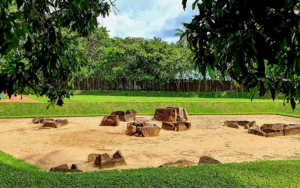
The word “megalithic” refers to the use of large stones in burial structures. Visitors should not expect towering monuments. At Ibbankatuwa, the stonework sits close to the ground and forms compact burial chambers.
How Were the Graves Built?
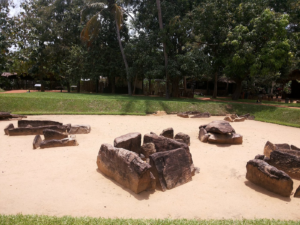
The most recognisable structures are cist burials. A cist is a box-like chamber formed with upright stone slabs, usually covered by another flat slab.
Some burials used large clay urns instead. Archaeologists have found cremated human remains in both cists and urns, together with pottery and other objects placed as grave goods.
The way the chambers were arranged suggests that burial was a planned community practice. Graves were grouped rather than placed at random, although researchers continue to study how individual groups may have related to families, social ties or different periods of use.
What Was Found Inside the Burials?
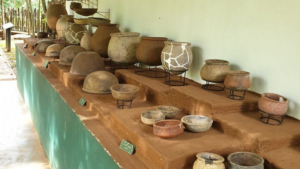
Excavations revealed clay vessels, beads, ornaments and metal objects. Copper items were found in significant numbers, alongside smaller quantities of iron and gold objects.
Beads made from materials such as carnelian, agate, glass and clay are among the most interesting finds. Some of these raw materials do not naturally occur in Sri Lanka. Their presence suggests that the community had contact with wider exchange routes, either through finished goods or materials passed between regions.
These objects should not be read simply as decoration. Grave goods can show what people valued, how they marked death and which materials were available to them. Pottery styles and metalwork also help archaeologists compare Ibbankatuwa with other Early Iron Age sites in Sri Lanka and South India.
Image suggestion: Clay vessels displayed inside one of the excavated graves
Alt text: Ancient pottery placed within a stone grave at Ibbankatuwa
What the Ibbankatuwa Megalithic Tombs Tell Us
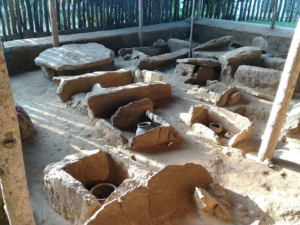
The cemetery was not isolated from daily life. Archaeologists also identified traces of an ancient settlement nearby, creating a rare link between a burial ground and the community that may have used it.
This connection helps researchers study more than funeral customs. Evidence from the settlement and cemetery can provide clues about farming, metal use, pottery production, food, movement and contact with other regions.
The burials also show that death was treated with care. Building stone chambers, cremating remains and placing selected objects with the deceased required time, labour and shared customs. Archaeology cannot tell us every belief behind these actions, but it can show that burial held an organised place in community life.
What Should First-Time Visitors Expect?
The site is open-air, with parts of the excavated cemetery protected by roofing. Visitors can view low stone chambers, capstones, clay vessels and the arrangement of graves within the excavated sections.
This is not a large ruin that reveals itself from a distance. The visit is quiet and detail-led. Reading the information boards, looking at how the stones fit together and noticing the objects placed within the chambers will help you understand what you are seeing.
Allow around an hour for an unhurried visit. A knowledgeable local guide can add context, particularly if you are unfamiliar with archaeological terms such as cist burial, urn burial and protohistory.
Image suggestion: Wide view of the protected burial site and grouped stone graves
Alt text: Grouped megalithic graves at the Ibbankatuwa archaeological site
When Is a Good Time to Visit?
A morning visit is usually more comfortable because much of the site is outdoors and Dambulla can become hot by midday. Late afternoon may also be pleasant if the site remains open long enough for a relaxed visit.
Published visitor information often lists daytime opening hours, but schedules, entrance charges and access conditions can change. Confirm the latest details locally before leaving your hotel.
Rain can make exposed soil and paths slippery. After wet weather, walk carefully around stone edges and covered excavation sections.
What Should You Bring?
A simple day bag is enough. Useful items include:
- Drinking water
- A hat and sun protection
- Comfortable shoes with good grip
- Light clothing
- A small umbrella or rain jacket
- Cash for any entrance payment
- A charged phone or camera
There may be limited visitor facilities, so plan food, water and restroom stops before arriving. Keep your bag light and avoid placing personal items on archaeological structures.
How to Visit Respectfully
Ibbankatuwa is a protected archaeological site and a burial ground. Treat it with the same care you would give a religious or memorial place.
Stay within recognised visitor sections and follow instructions from staff. Do not sit or climb on stone slabs, move pottery, touch exposed remains or collect stones from the ground.
Keep children close, especially near open chambers and uneven surfaces. Ask before using flash, tripods or other photography equipment if staff are present.
The site sits within a living local community. Keep noise low, use marked parking spaces and ask permission before photographing residents or nearby homes.
Can You Combine It with Other Dambulla Sites?
Ibbankatuwa works well as part of a broader Dambulla history day. You could visit the burial ground in the morning, take a break during the hottest hours and continue to Dambulla Cave Temple later.
The two places represent very different periods. Ibbankatuwa introduces communities from the Early Iron Age, while the cave temple reflects more than two thousand years of Buddhist worship and artistic work.
Avoid filling the day with too many stops. Time to read, rest and observe often gives you a better understanding than moving quickly between several monuments.
Plan Your Visit to the Ibbankatuwa Megalithic Tombs
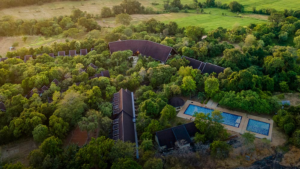
The Paradise Dambulla is a 4-star hotel in Dambulla set among trees within reach of the region’s cultural sites. Its quiet setting gives guests a comfortable place to return to after a morning spent at Ibbankatuwa or Dambulla Cave Temple.
The hotel has a large swimming pool, a children’s pool, two restaurants, two bars, a fitness centre and the Ayu Balinese Spa. These facilities make it easier to balance heritage visits with rest during a longer stay in the Cultural Triangle.
Explore the hotel’s rooms and current offers, or contact The Paradise Dambulla for help planning your stay. Confirm the latest access details for the burial site before travelling, then give yourself enough time to understand this quieter part of Sri Lanka’s early history.


