
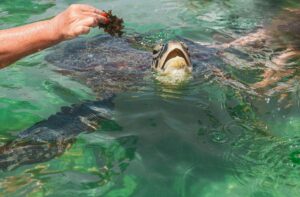
Sri Lanka’s southern coastline is one of the most important regions in the Indian Ocean for sea turtle nesting. Each year, several turtle species return to these sandy shores to lay their eggs.
Several beaches along Sri Lanka’s south coast support nesting activity and conservation monitoring. If you are planning a trip to the region, here are five turtle nesting beaches in Sri Lanka’s south coast where this natural event is known to occur.
When Do Sea Turtles Nest in Sri Lanka?
Sea turtles can nest throughout the year in Sri Lanka, but activity along the southern coast usually increases between November and April.
During this period, calmer seas and warm sand create favourable conditions for nesting.
Turtles usually come ashore late at night, when beaches are quieter, and temperatures are lower.
The species most commonly recorded on Sri Lanka’s southern coast include:
- Green turtles
- Olive ridley turtles
- Hawksbill turtles
- Loggerhead turtles
- Leatherback turtles (rare)
Because nesting is a sensitive process, conservation teams encourage visitors to observe quietly and keep a respectful distance during this period.
Key Turtle Nesting Beaches on Sri Lanka’s South Coast
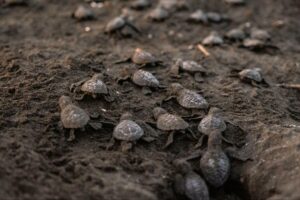
Rekawa Beach – One of Sri Lanka’s Most Active Turtle Nesting Sites
Rekawa Beach near Tangalle is widely considered the most reliable place in Sri Lanka to observe natural turtle nesting.
The Rekawa Turtle Conservation Project monitors the shoreline and protects nests from predators and human disturbance.
Visitors who want to see turtles usually join guided night walks organised by conservation teams.
What makes Rekawa special:
- multiple turtle species are recorded every year
- long-running conservation project
- organised turtle watching programmes
Guides ensure visitors follow responsible viewing practices, which helps protect nesting turtles.
Godavaya Beach – A Quiet Nesting Habitat
Godavaya Beach, located near Hambantota, forms part of a protected coastal sanctuary.
The quiet shoreline provides suitable nesting conditions, and researchers have recorded nesting activity here, including the rare leatherback turtle, the largest turtle species in the world.
Because the beach remains relatively undisturbed, it offers an important habitat for marine wildlife.
Travellers exploring the southern coastline can visit Godavaya while travelling between Tangalle and Hambantota.
Bundala Coast – Nesting Beaches Near Bundala National Park
Bundala National Park is famous for wetlands and migratory birds, yet the coastline bordering the park also supports turtle nesting.
The sandy beaches here remain largely undeveloped, which helps maintain a natural environment suitable for nesting.
Visitors exploring Bundala may combine:
- a wildlife safari inside the park
- a visit to the nearby coastal nesting areas
Since this region forms part of a protected ecosystem, wildlife authorities monitor the shoreline during nesting season.
Turtle Conservation Beaches on Sri Lanka’s South-West Coast
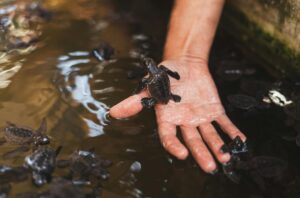
Kosgoda Beach – A Longstanding Turtle Conservation Area
Kosgoda Beach has been associated with sea turtle protection for decades. The area is well known for conservation projects that protect eggs and rehabilitate injured turtles.
While many visitors come to learn about hatchlings and conservation work, the surrounding coastline has also supported nesting activity.
Travellers visiting Kosgoda can learn about:
- turtle nesting behaviour
- egg protection programmes
- rehabilitation of injured turtles
This makes the area an educational stop for those interested in marine conservation, especially when you visit with children.
Tangalle Coastline – Long Beaches with Seasonal Nesting
The wider Tangalle coastline includes several long sandy beaches where turtles nest.
These beaches stretch for kilometres, and turtles often choose quieter sections to lay their eggs during the season.
Although nesting here is less predictable than at Rekawa, conservation volunteers occasionally monitor sections of the coast when activity increases.
Travellers visiting Tangalle may notice protected nest areas marked along this shoreline.
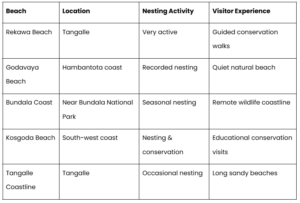
Quick Comparison of Turtle Nesting Beaches on the South Coast
How to Choose a Turtle Nesting Beach to Visit in Sri Lanka?
Different beaches provide slightly different experiences.
- Rekawa is usually the best option if you want a guided turtle nesting experience.
- Bundala and Godavaya suit those who enjoy quieter wildlife environments.
- Kosgoda is ideal for visitors interested in learning about conservation projects.
Meanwhile, Tangalle’s beaches are worth exploring if you are travelling along the coast and want to visit a less crowded shoreline.
Staying Near Turtle Nesting Beaches

Several turtle nesting beaches on Sri Lanka’s south coast are located within easy reach of Dickwella.
Rekawa Beach and the Tangalle coastline are both a short drive away. This makes Dickwella a convenient base for travellers who want to explore turtle nesting areas during the evening.
Staying at Dickwella Resort & Spa, a beach resort at Dickwella, allows you to plan day trips along the coast while returning to a quieter seaside setting after exploring nearby wildlife locations.
The resort has also taken steps to support marine conservation in the region. Browns Hotels & Resorts launched a Sea Turtle Conservation Hub at Dickwella Resort & Spa, an initiative that focuses on protecting sea turtles and raising awareness about their nesting habitats.
For guests, this adds an educational element to the stay. It offers a chance to learn more about turtle conservation along Sri Lanka’s south coast, while staying close to several beaches where these remarkable marine animals return each year to nest.
Experience Turtle Nesting on Sri Lanka’s South Coast
Sri Lanka’s south coast provides important nesting grounds for several sea turtle species. Beaches such as Rekawa, Godavaya and Bundala play a key role in protecting these marine animals.
If you are interested in nature and conservation, visiting these turtle nesting beaches can be a memorable experience. With respectful observation and guidance from conservation teams, you can witness turtle nesting while helping protect these remarkable animals for the future.


